



Key Control Points for the Full Process of Mold Cooling Channel Design, Machining and Pressure Testing
Cooling system is the heart of an injection or die-casting mold. Unreasonable design, machining errors or undetected leakage will lead to uneven mold temperature, long cycle time, part warpage, sink marks and high reject rate. Cooling channel deviation is one of the most frequent hidden pain points in mold manufacturing.
We control the cooling waterway from design, CNC machining to final pressure testing in a closed-loop workflow to stabilize mold cooling performance for automotive and precision plastic components.
1. Design Stage: Prevent Deviation at the Source
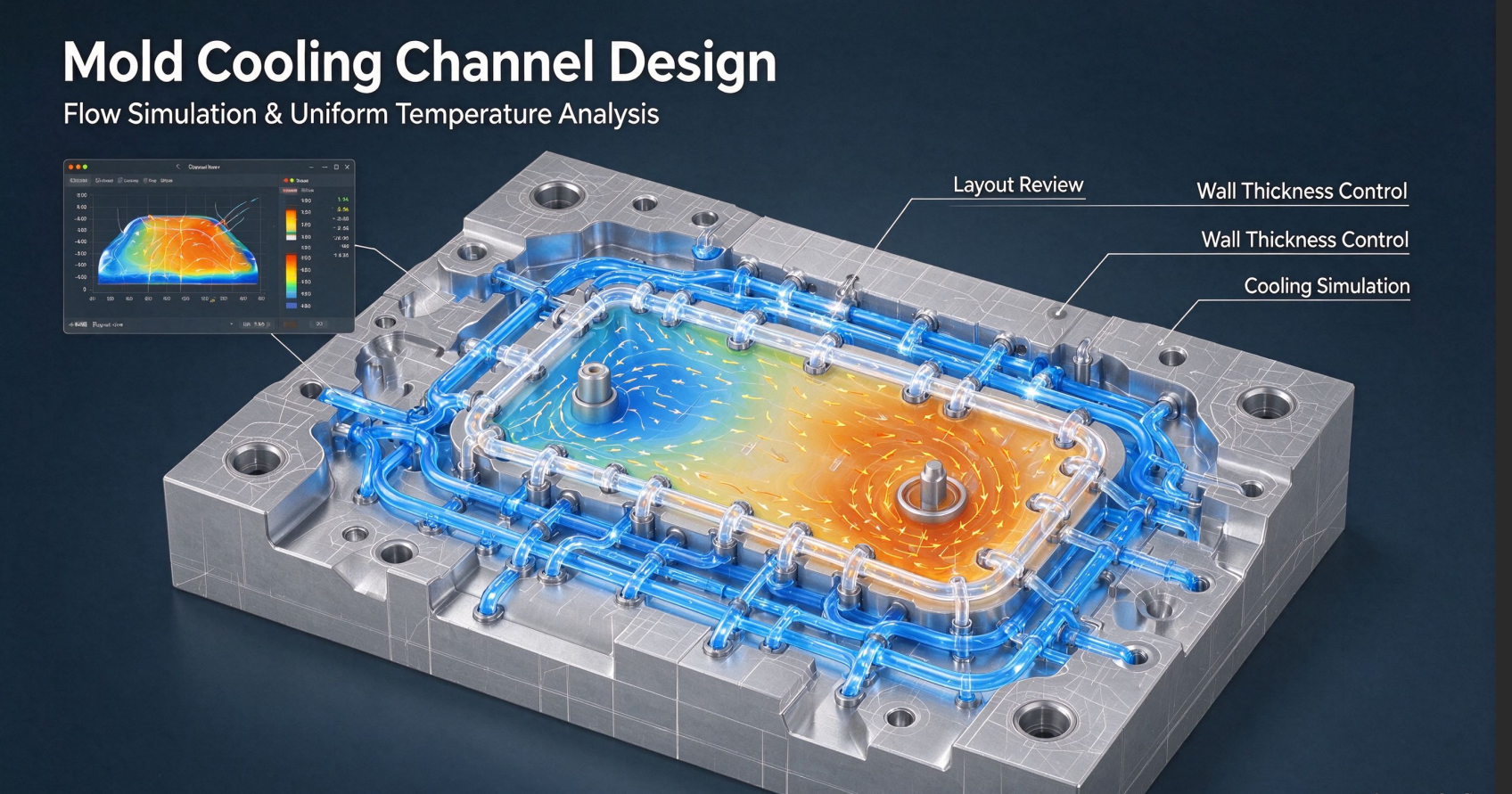
Many waterway deviations are caused in the design phase rather than machining. Our engineers follow these rules:
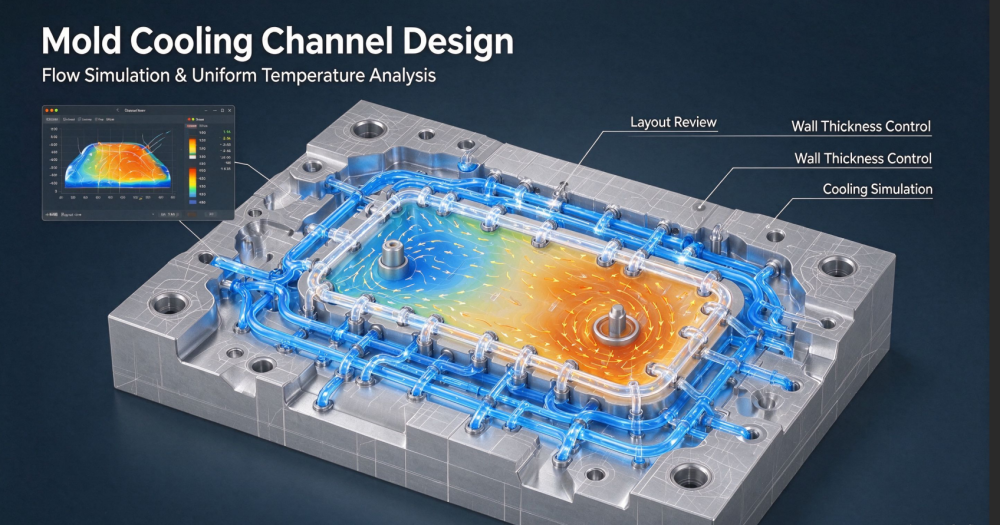
Keep consistent wall thickness between cooling channels and mold cavity surface; avoid local thin walls or too large distance differences.
Avoid sharp right-angle turns inside waterways. Smooth arc transition reduces flow dead zones and processing blind spots.
Check interference with ejector pins, hot runner nozzles, screw holes and slide structures via 3D simulation before releasing drawings.
Mark theoretical coordinates, hole depth, diameter and thread specifications clearly on 2D drawings.
Run mold flow cooling simulation to verify temperature distribution, flow velocity and pressure drop before machining.
Common pain point here:Design only considers layout without checking machining accessibility, resulting in inclined, offset or partially blocked waterways after processing.
2. Machining Stage: Dimensional & Position Tolerance Control
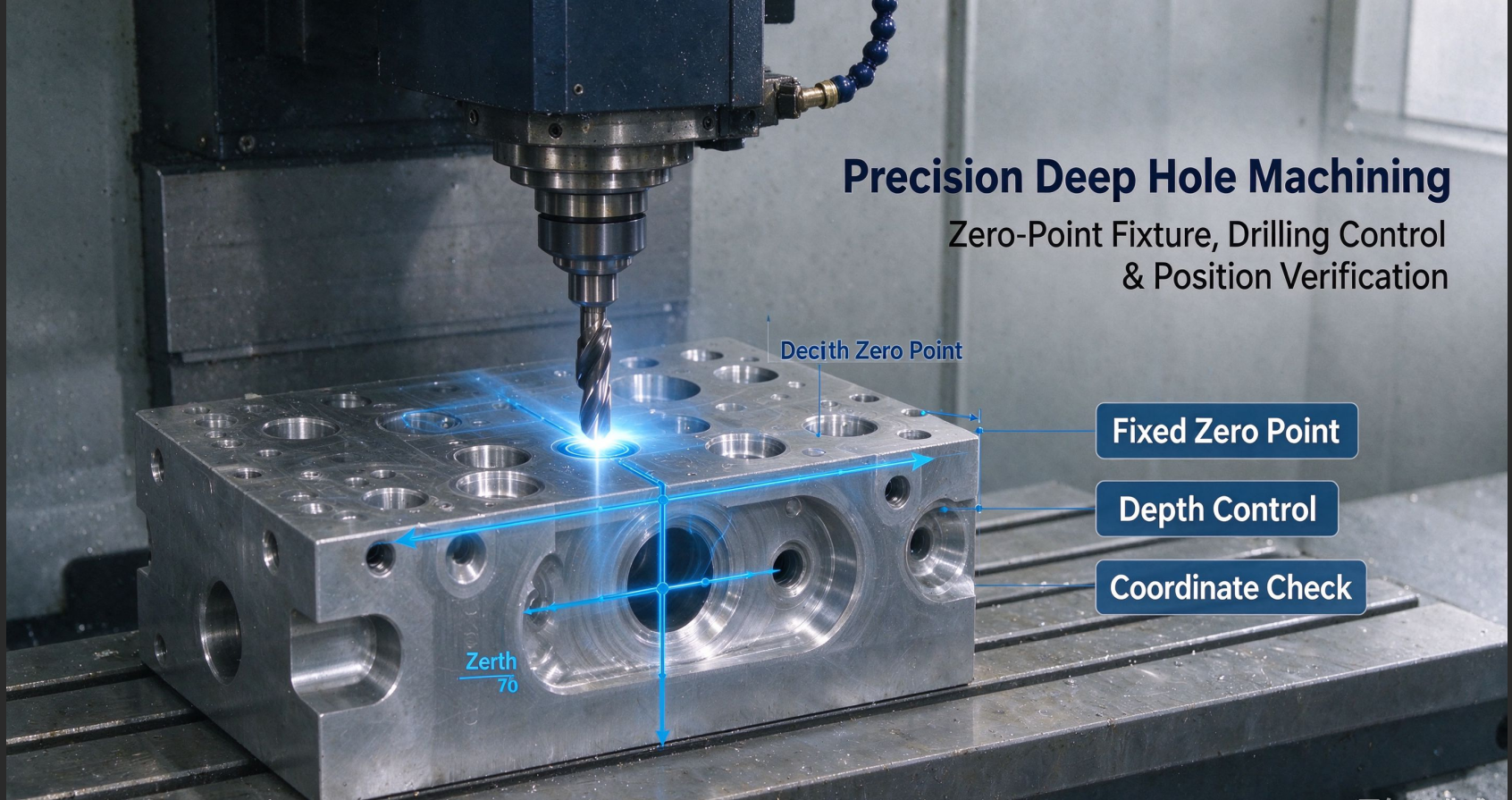
Cooling channel position deviation usually comes from positioning error, tool deflection and inconsistent deep-hole drilling. Our on-site control measures:
Use unified 0-point clamping system for all deep hole drilling to reduce repeated positioning error.
Separate drilling steps: pilot hole → deep hole drilling → deburring → internal polishing, strictly control hole diameter tolerance and center position tolerance.
Record actual drilling coordinates and depth for each waterway, compare measured data against 3D theoretical values.
For conformal cooling inserts, we use dedicated 5-axis machining strategy to guarantee the designed curve path.
Common pain point here:Deep hole drift during long-distance drilling. The actual waterway center deviates from the designed path, causing asymmetric cooling.
3. Assembly & Deburring: Remove Hidden Obstructions
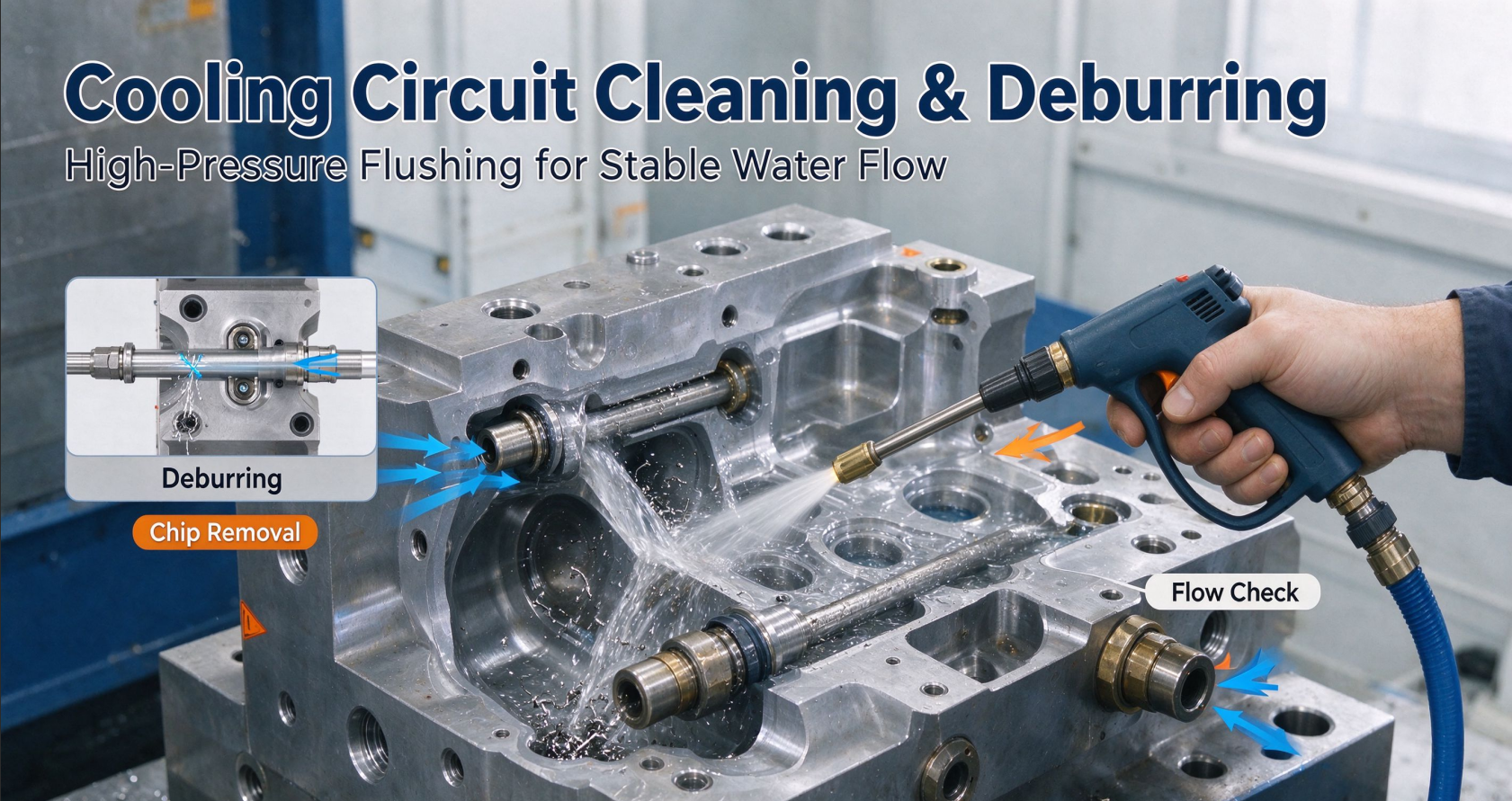
After machining, burrs, metal chips and residual cutting fluid easily stay inside the waterway:
Full internal deburring and chip cleaning for every cooling circuit.
Air blowing + high-pressure flushing before mold assembly to confirm smooth circulation.
Check connector thread and sealing groove to avoid blocking caused by sealing ring misalignment.
Common pain point here:Chips left inside the channel, partially blocking water flow. The mold passes pressure test at first but gets clogged after mass production.
4. Pressure Testing Stage: Standardized Test & Documentation
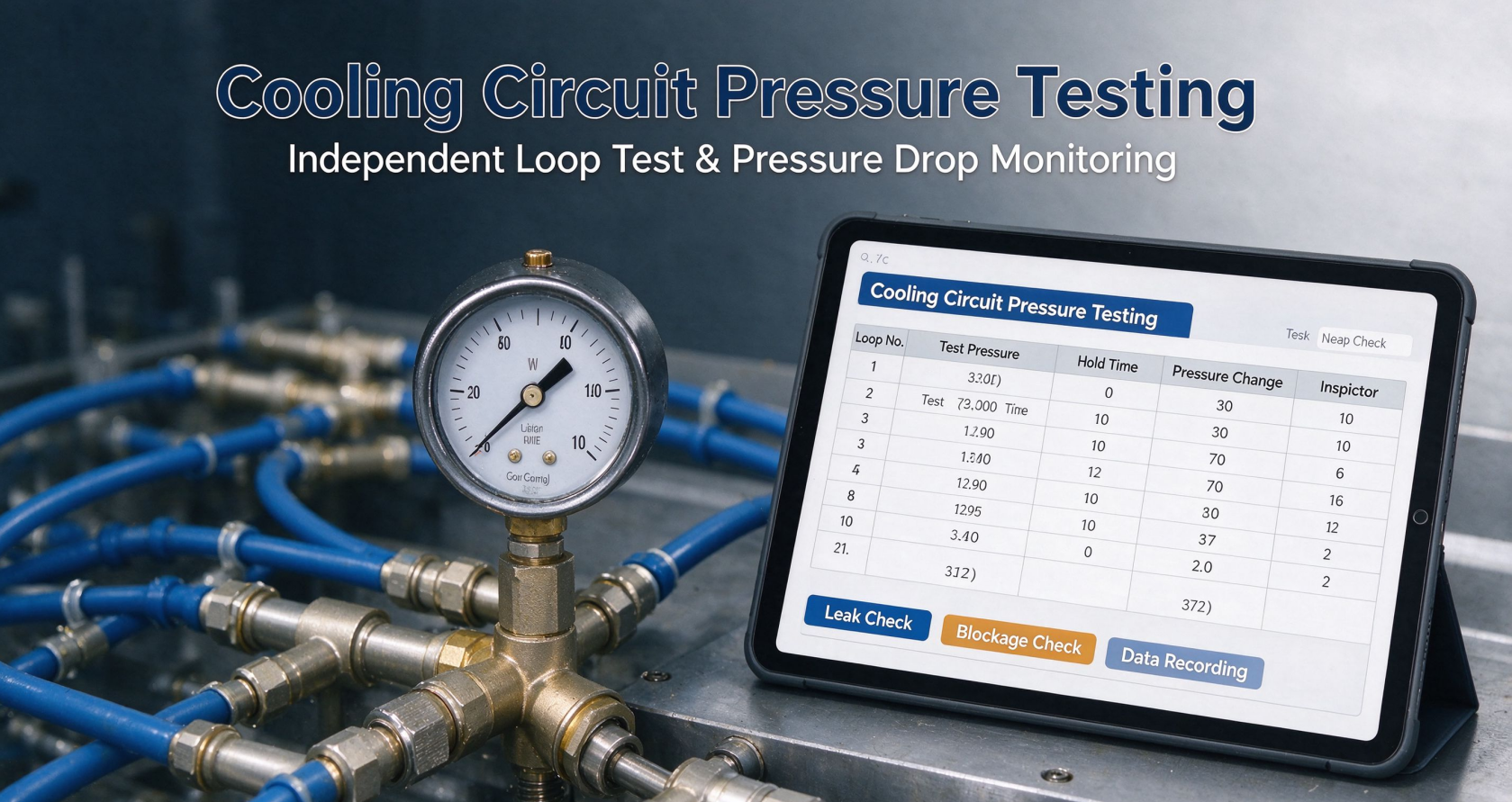
Pressure testing is the final verification to check leakage, blockage and circuit connectivity. Our standard procedure:
Isolate independent cooling loops one by one instead of testing all circuits together.
Follow customer requirement for test pressure and holding time (common: 1.5X working pressure, hold for 15–30 minutes).
Monitor pressure drop in real time. Any obvious pressure drop means leakage.
Record test data: loop number, test pressure, holding duration, pressure change, visual inspection result, inspector signature.
Attach photos of pressure gauge and test setup into mold inspection report for PPAP / IATF16949 submission.
Common pain point here:Mixed-up water circuits or untested individual channels; minor leakage is hidden and only appears after trial production.
5. Traceability & Handover
All cooling channel related records (drawing revision, machining inspection sheet, pressure test report, deviation handling record) are filed together with mold documents. If any deviation is found, we start corrective action: rework, adjust design or modify processing method before mold trial.
Summary
Cooling circuit deviation cannot be fixed only by final pressure test. Stable cooling relies on source design review, precise deep-hole machining, thorough cleaning and standardized pressure testing. This full-process control helps our customers get shorter cycle time, more stable part dimension and lower defect rate in mass injection production.
If you have projects requiring high-precision mold cooling design and validation, welcome to send us your 3D data for technical evaluation.
Related News
-
Key Control Points for the Full Process of Mold Cooling Channel Design, Machining and Pressure Testing
Industry News | 2026.07.30Learn More
-
Struggling with MiFi Housing Assembly? Inside Seaflyer's Precision Manufacturing Ecosystem
Company News | 2026.07.30Learn More
-
What Should Be Included in Mold First Article Inspection (FAI) Reports Under IATF 16949
Company News | 2026.07.30Learn More
-
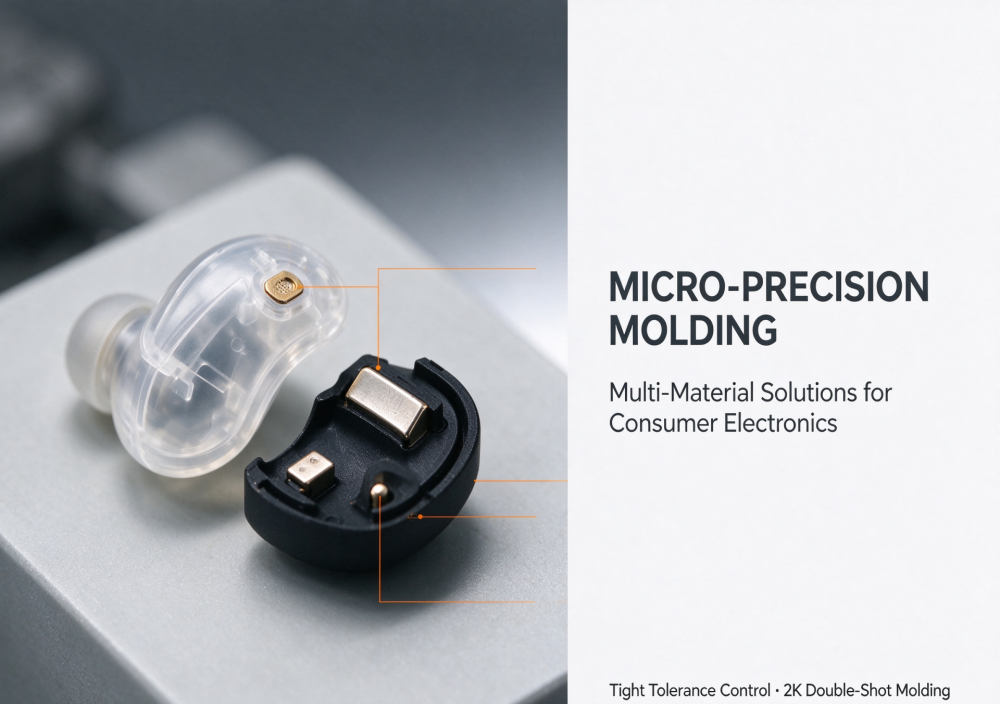
From Micro-Molds to Smart Devices: Inside Seaflyer’s Comprehensive Consumer Electronics Manufacturing Ecosystem
Company News | 2026.07.30Learn More